
Not long ago we had to make another trip together in our car. We have owned our car for less than 2 years but long enough that we should understand the car we own and drive, by now. We have made many excursions, both long and short in this car. However, it is made by a company that we have never owned a car from before. We are very unfamiliar with their vehicles. So, every once in a while, we have questions about this or that that send us to the owner’s manual for answers to our questions. A little bit of searching and study usually gives us an answer. The car has been planned well, well thought out about what makes the car very user friendly. During our “not long ago trip”, my husband volunteered that he had observed something, a mysterious phenome-non on the dash of the car. He had never observed it in any other car he had driven. Or maybe he had just not noticed it. Or maybe our cars have been older, and this one is a bit newer. Whatever the reason, he got my attention, and I observed from my passenger seat! Sure enough, the strange and mysterious phenomenon was plainly visible to me, too!
Probably some would say that we were very behind the times—that everyone else has known about this—forever! But we had no clue! What we were seeing was a lighted circle that surrounded most of the dash information: the speedometer, gear indicator, check engine and fix engine lights, parking and brake indicators, cruise control, the door and seatbelt lights. The lighted circle changed from a green circle into white and back to green, then back to white. It was interesting and we came up with some theories—decoration, something to avoid eye fixation, a frame for all those other indicator lights, or maybe an indication of lights being on…………? In reality, we had no clue.
So, being in a technological time, I decided to google this phenomenon. Sometimes google can help educate you, and sometimes not. This time we got educated.
Our education: A change from a green to a white dashboard light typically indicates a shift in your driving style or the status of a specific system, such as fuel economy or driver-assist features. For example, a green light often means “efficient” like when traveling downhill and saving gas, while a white light can mean “inefficient” or “in transition” for a fuel economy indicator like when you are driving up hill and using more gas, or a system is in a different operational state. Other possibilities of changing lights are Green: The vehicle is being driven efficiently, with good fuel economy. White: The vehicle is being driven less efficiently, which can happen when you are accelerating hard, braking, or idling. The lights can also be for driver-assist features: Green: A system like Adaptive Cruise Control or automatic high beams is active and functioning correctly. White: A system is on standby or has changed its state. For example, a white light may indicate that the system is enabled but not actively controlling the vehicle, or it is analyzing conditions, such as traffic for the auto high beams. There are also indicator lights for high beam and low beam. Wouldn’t it be nice if we ourselves had efficiency warnings built into us. We would know when to slow down or speed up, stop and rest, get up and go. The warning would let us know how to travel efficiently. But then too, perhaps God did put a warning device within us. I think he gave us a conscience to give us those indications. It might have been nice that we could visually see when we are being efficient! But I don’t think I want to glow green!!! God has given us the Bible, our own green and white warning, a light for our path on how to travel the path of life efficiently. But like all warning indicators, it is up to us to heed the warnings. If we choose to ignore, then the consequences are on us. So often we rebel and don’t want to get those warnings that our consciences give us—in fact we are ignoring the Holy Spirit. Think about that for a minute!
I had and found some more thoughts about warning lights. When you notice dashboard warning lights, symbols can cause worry and confusion about a potential issue with your car, what do they mean and what could be the cause. The out of gas light tells when we are about to lose power. Losing power means that we need His power to fuel us up every day as we journey the road towards Him. The good news is that some of the dash lights are not signs of trouble at all; instead, they’re symbols that show you that a specific system is functioning as intended. Others are signs to keep an eye on a certain part of your vehicle and are not cause for major concern. But it’s always best to keep in mind that many dashboard warning lights, symbols, and icons on the gauge cluster indicate that urgent vehicle care may be required. We should check the guide to see what the dashboard icons are trying to tell us and schedule a checkup for service. When it comes to some car dashboard warning lights, symbols vary in color. Some appear green, and some are red. This color coding can be thought of as a traffic light. The colors usually mean things:
Green means a system is active and functioning normally. Green dashboard lights are not cause for concern; continue driving normally.
Yellow means a problem may be present. Caution should be exercised if these lights come on, and you should look into the issue.
Red means stop the car whenever possible, as a major problem has occurred. Bring your car to a service center immediately. Some red dashboard warning lights, symbols, and indicators are more serious than others.
All these lights are for successful driving experiences, but those lights are symbols of what the Holy Spirit is giving us to make us successful in life. An example might be the cruise control light. God wants to control how fast things should happen. Sometimes we want them to happen faster, and God says and tells us to slow down, but other times He also thinks things can happen faster than we want them to happen. The cruise device controls how fast we can go if we set the cruise control. We must set our life’s cruise control by letting God have control. God in control is not like when we let the car have control of our speed through life.
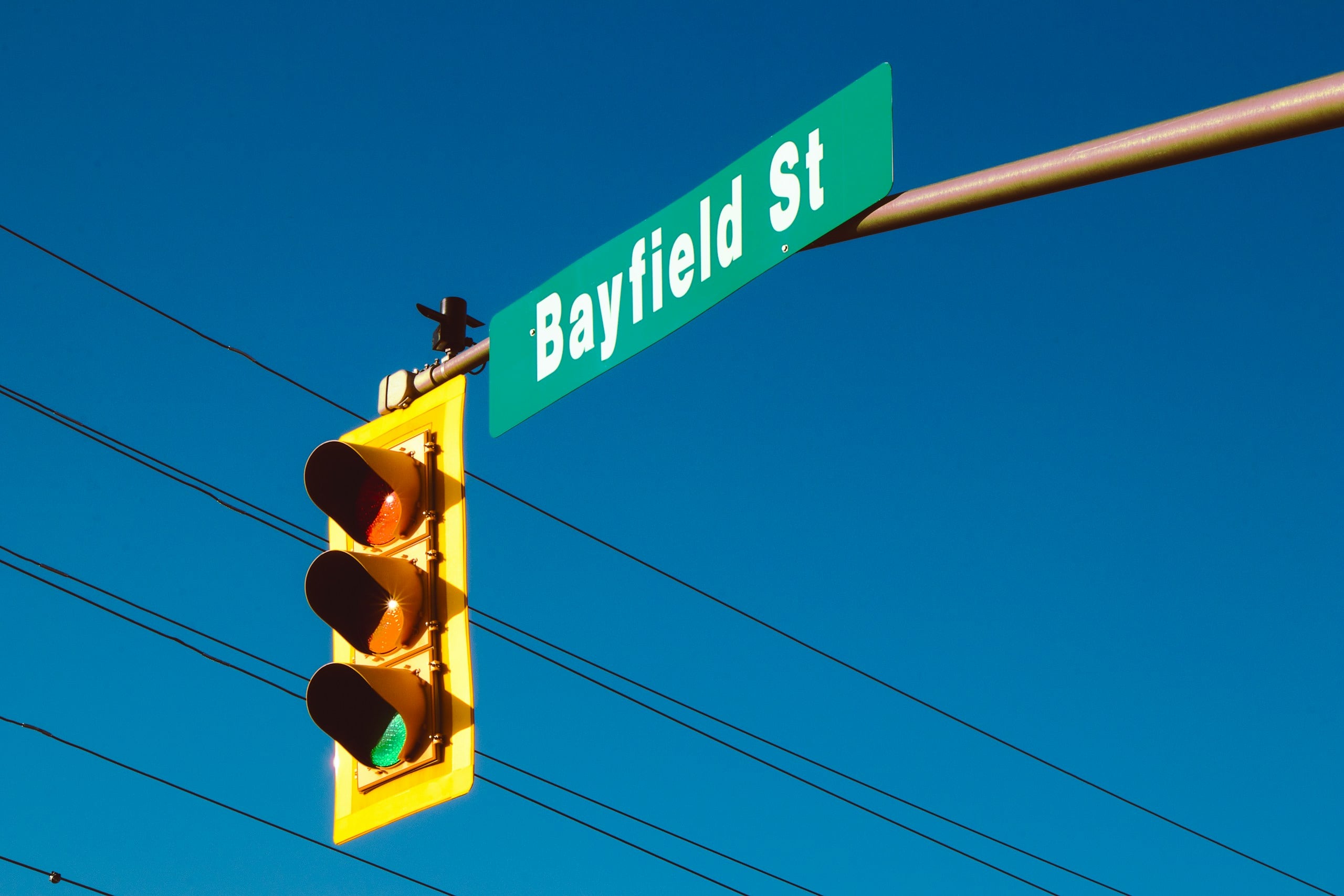
The idea that “God sends signals in lights” is shown in several ways, including the biblical creation of celestial lights for signs, sunset and sunrise, seasons, northern lights. There is the use of “traffic light” analogies (green, yellow, red) for divine guidance, and that of divine light illuminating the human spirit. Some biblical events are viewed as direct messages from God in the form of light or celestial signs, such as the Star of Bethlehem, a sign in the sky that guided the Magi to the birth of Jesus. The Bible states that God created lights in the sky to be for “signs and for seasons and for days and years” (Genesis 1:14). And there are more interpretations of “signs and wonders” as direct messages. The concept of “God’s traffic signals” can give even more prayer analogy guidance—Green light: An obvious “yes” to a prayer or path. Yellow light: A “not yet,” meaning to slow down, wait, and prepare. Red light: A “no” to a particular request or path. God guided the Children of Israel with clouds of light by day and fire by night. His go and stop lights and signs to be followed and obeyed.
Spiritual interpretations of light lead to these thoughts—
Inner light: Some traditions speak of a divine light or spirit that resides within a person. Guiding light: God’s light can be seen as a guiding force that illuminates our hearts and mind, casting out darkness and helping people live according to God’s will. Reflecting light: The idea is also that believers are given this light so that they can reflect God’s light to the world, serving as a beacon of hope each day.
Red traffic lights are no one’s favorite!
Even though traffic signals have green and yellow lights, I still consider them “red” lights. Regardless of the fact they are meant for my protection, they signify stopping, impeding my progress, restricting my actions. In other words, my reactions to them can reveal I am impatient, inconsiderate of others, and insensitive to the fact that they deserve to have green lights as well.
Sometimes when a traffic signal turns yellow, I can be tempted to speed up to get through the intersection before the dreaded “red” light appears. Occasionally I cut things a bit too close and the light turned red before I entered the intersection. Suddenly, I am caught breaking the law. I have sinned in my impatience. There are consequences for breaking the rules—both immediately and for eternity. Repenting, asking for forgiveness, determining to stop the rule breaking, and then heed the yellow lights in my life.
Perhaps you’ve seen this—the approaching traffic signal turned yellow and, instead of stomping the gas pedal, I braked to a stop. Unfortunately, the driver in the lane beside chose to speed through on red and almost caused a nasty wreck. At that moment, God’s Spirit spoke to me about my impatience. No, it wasn’t about “red” traffic signals, but with His authority for the red flags.
For those times when I might run a red light, I think I am gaining on my life schedule. But in reality, I am needlessly and dangerously rushing ahead, placing myself and others at risk. In essence, I’m positioning myself where I am not supposed to be. Consider this: how many times has an accident happened just in front or just behind you? That happened to us! Or a vehicle turned right in front of where you could have been if you had been rushing? Mere coincidences? Probably not. See, God is the Ruler and in control of every detail of life, even traffic signals. I’ve come to realize that every stop sign, every red light, every traffic jam, none are a surprise to Him. He sees all and orchestrates everything to place me exactly where I’m supposed to be. That is, IF I am surrendered to Him, IF I am following Him, and IF I am heeding His spiritual traffic signals.
What “red” lights am I running today? Is the Holy Spirit whispering, “Hey, it’s time to pump the brakes and slow down”? Please listen to whatever cautionary influence God places in your life. We owe it to ourselves to wait for His best instead of settling for what we consider good.
Changing a car’s dash lights offers a powerful devotional analogy for spiritual maintenance, illumination, and renewal. Just as a car’s dashboard provides essential information for a safe journey, our inner spiritual “lights” guide our lives.
Our lives can be likened to a vehicle on a journey. The dashboard represents our conscience and the various indicators of our spiritual health—our spiritual warning dashboard. When a “check engine” or oil light comes on, it signals a problem that requires immediate attention. In our spiritual lives, God uses the promptings of the Holy Spirit, the counsel of Scripture, or the loving correction of others to highlight areas of sin, fear, or neglect. Ignoring these warning signs or covering them with “black duct tape” by justifying our actions can lead to a spiritual “breakdown”. If the dash lights are dim or completely out, we struggle to see clearly, especially when navigating darkness or uncertainty. This is like having a dulled conscience or a spiritual light that has lost its shine due to the stresses of life or unaddressed sin. We may grow “used to the darkness,” forgetting the energy of a life fully in God’s light.
The act of replacing the broken or dim lights parallels our need for spiritual renewal and allowing God to work in our lives. Just as we take our car to a skilled mechanic, we need to turn to the ultimate “mechanic” of our souls, Jesus Christ. He is always waiting to perform a tune-up or an overhaul, if we let Him. The “owner’s manual” for this process is the Bible, which provides wisdom and guidance for every situation we face.
Replacing the old, faulty bulbs with fresh new, bright ones represents “putting off your old self” and “putting on the new self, created to be like God in true righteousness and holiness” (Ephesians 4:22-24). It signifies a fresh start, allowing the divine life of Christ to flow through us without the hindrance of sin or doubt. With new, working lights, the path forward becomes clear. Spiritually, this means we gain greater insight, wisdom, and guidance from the Holy Spirit. We can see the “dust” and missed areas in our lives that need “cleaning” and correction, which we couldn’t see before when we have some illumination.
The ultimate purpose of the new lights is to provide clear vision for my journey. Jesus calls us to “let your light shine before others, that they may see your good deeds and glorify your Father in heaven” (Matthew 5:16). We don’t have light of our own; we shine with the reflection of Christ, who is the Light of the World (John 9:5). A brilliant dashboard light is only useful if it helps the driver navigate. Similarly, our spiritual light should manifest through our actions—love, kindness, patience, and good works—pointing others to God, not ourselves.
Prayer Thought: Lord, help me to be attentive to the “warning lights” on the dashboard of my soul. When my light grows dim, remind me to come to You, the source of all light and life, for a fresh bulb and a spiritual tune-up. May my life be a clear, bright reflection of Your love, guiding others safely on their journey. Please God, help me to understand and heed the warnings I get today!