
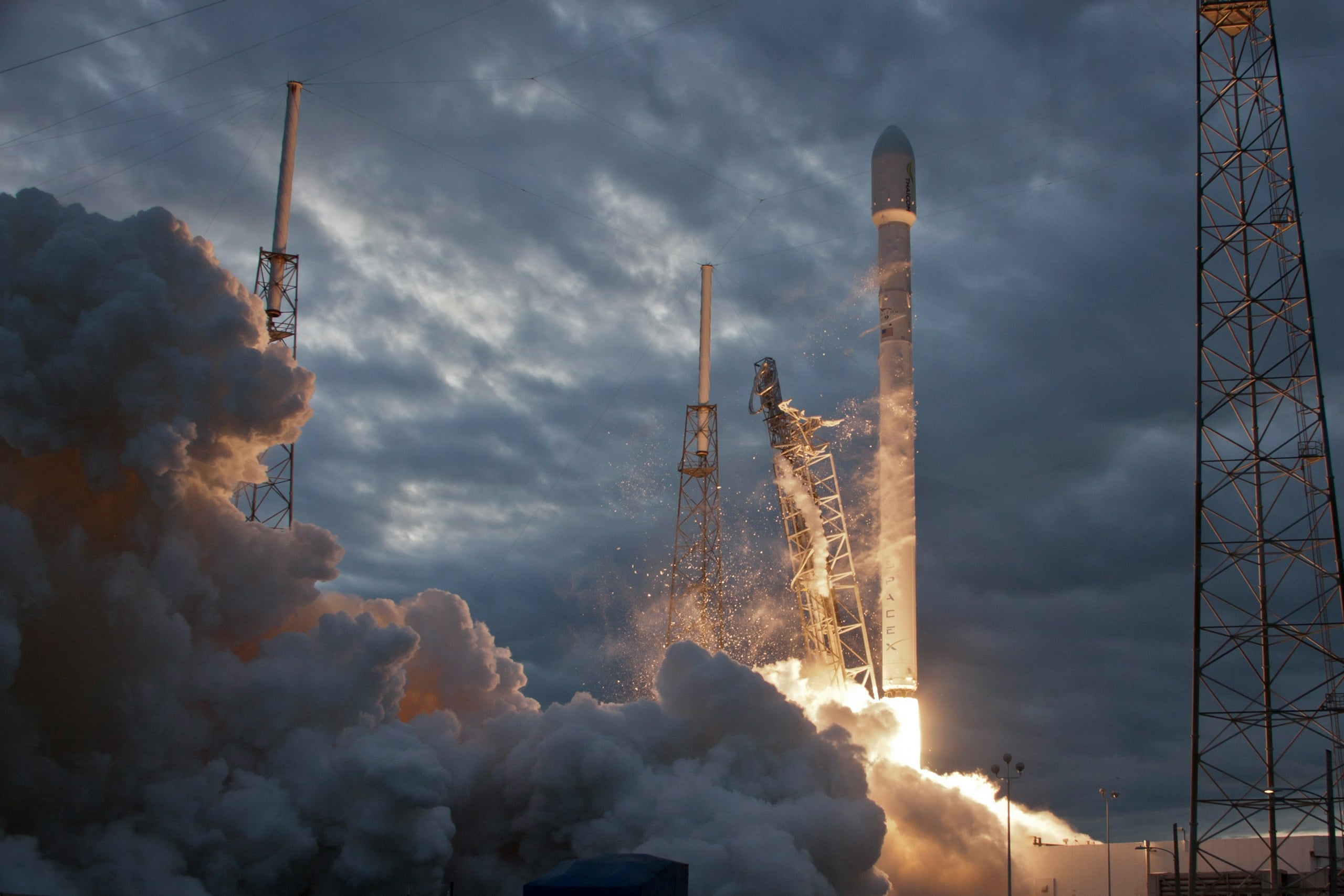
When I was in grade school, the talk at times was about going into space for the first time. My best friend even named her horse Sputnik! Sputnik 1 was the world’s first artificial satellite, launched by the Soviet Union on October 4, 1957. The launch of this small, beach ball-sized sphere initiated the Space Race and the Space Age, creating the Sputnik crisis in the United States, a period of public fear about a technological gap with the Soviet Union. Sputnik 1 transmitted radio signals for 22 days before its orbit decayed, causing it to burn up in the atmosphere in January 1958. The Sputnik program was a series of Soviet Union artificial Earth satellites launched between 1957 and 1961, with the most significant being Sputnik 1, the first artificial satellite ever to orbit Earth on October 4, 1957. This was followed by Sputnik 2 in November 1957, carrying the first living animal, the dog Laika, into orbit. The program culminated with Sputnik 3, a larger research satellite launched in May 1958. This all happened while I was a young grade school student.
Then came the 1960s. The 1960s was a groundbreaking decade for space exploration, marked by the Soviet Union’s first human spaceflight with Yuri Gagarin (1961) and the U.S. launching Alan Shepard’s first suborbital flight (1961). It might
During the American space flight efforts in the winter of the 1960s, there were no human spaceflights, but the Mercury-Atlas 6 (MA-6) mission experienced delays due to poor winter conditions, with a crucial launch attempt for John Glenn’s flight being scrubbed on January 27, 1962, due to thick clouds. Glenn finally launched on February 20, 1962, becoming the first American to orbit the Earth. This was a winter for us that included lots of snow and school buses often slid off the roadways and drivers found themselves unable to move until rescue help came. As students, we rejoiced that we would not be counted tardy if we were bus riding students! It wasn’t our fault we “had to miss part of the school day!” On that day in 1962, we were in the ditch in a snowbank in my neighborhood. The bus driver directed us to leave the bus and go to the nearest house. The lady was gracious and invited the bus kids into her home. And that day she had her television on to watch the launch of the first American to go to space. It became memorable to me as my own home did not have a TV. So this was impressive to me in several ways.
Key U.S. programs included Project Mercury, which put the first American in space; Project Gemini, which developed crucial rendezvous and docking skills for the upcoming Moon landing; and the massive Apollo Program, which culminated in the historic Apollo 11 mission in July 1969, landing the first humans on the Moon. Major Soviet achievements included the first multi-person crew (1964), the first spacewalk by Alexei Leonov (1965), and the first spacecraft to reach the surface of another planet (Venera 3 in 1966). To refresh mine and your knowledge of space history here is some help:
Project Mercury: Launched the first American astronauts into space, proving humans could function in weightless conditions for extended periods.
Project Gemini: A crucial step toward the Moon, Gemini missions successfully practiced spacewalks, rendezvous, and docking of spacecraft, essential for the Apollo Program.
Apollo Program: Dedicated to landing humans on the Moon.
Apollo 8 (1968): The first mission to orbit the Moon.
Apollo 11 (1969): Successfully landed the first humans on the Moon, Neil Armstrong and Buzz Aldrin.
Apollo 16 was the tenth crewed mission in the United States Apollo space program, administered by NASA, and the fifth and penultimate to land on the Moon. It was the second of Apollo’s “J missions”, with an extended stay on the lunar surface, a focus on science, and the use of the Lunar Roving Vehicle. Wikipedia
If you heard the news of this past week, there were several things considered newsworthy, and the news anchors endeavored to capture your attention with breaking news headlines. Some of the headlines captured the emotions of many, the hate of others, even the scandalous! One of the newsworthy events was mentioned briefly and then passed by. In case you missed it, it was the plan to launch to the moon again. This planned launch and flight will be known as The Artemis II mission. This week, the NASA Artemis II four astronauts participated in a news conference to discuss their upcoming moon flyby mission, scheduled for launch no earlier than April 2026, following a delay to address issues like the Artemis 1 heat shield.
The Artemis II mission is a 10-day test flight around the Moon, designed to test new systems and capabilities for human deep space exploration.
NASA could launch its Artemis II mission, which will return and fly astronauts around the moon for the first time in more than 50 years–1972, in February 2026. The mission had previously been delayed until April, but, during a press conference at the Johnson Space Center in Houston NASA officials said they may hit a launch window that could open as early as Feb, 5. We together have a front row seat to history. Artemis I, which launched in November 2022 and was completed in December, marked the first step in an ambitious plan to establish a long-term presence on the moon for scientific discovery and economic development, and potentially even send a crewed mission to Mars. The lessons learned will help prepare for Artemis III, which will be an attempted landing on the moon. Charlie Blackwell-Thompson, launch director for Artemis, said that the rocket system that will take the astronauts into space, the Space Launch System (SLS), is “pretty much stacked and ready to go.”
The cost to fly into orbit varies greatly by provider and mission type, with private flights to orbit costing tens of millions of dollars, like the estimated $55 million per seat for SpaceX’s Crew Dragon flights to the International Space Station (ISS). For commercial satellite launches, companies like SpaceX can charge significantly less, with launches costing around $60-67 million. SpaceX Crew Dragon has an estimated cost of $55 million per seat for private individuals to travel to the InternationSpaceStation in 2022. A full civilian mission in a Crew Dragon capsule cost $220 million in 2021, paid for by a billionaire. To fly on the Boeing Starliner you need a n estimated $90 million per seat to the ISS. NASA/Commercial Partnership estimates for private citizens, the cost to access the ISS can include daily fees (e.g., $35,000 per day for an astronaut in the past) in addition to a round-trip cost estimated at $50 million.
Costs differ significantly for each mission–between suborbital trips (shorter, edge-of-space flights like those offered by Blue Origin and Virgin Galactic) and orbital trips.Companies like SpaceX and Boeing have different cost structures for their orbital vehicles. Flights to the ISS are often shared missions, and the total cost for a seat includes factors like life support and mission control. Specialized equipment, including spacesuits and life support systems, adds to the overall cost.
The cost of launching a spacecraft into orbit is one of the biggest expenses associated with space travel. Depending on the type of spacecraft and launch vehicle used, this cost can range from tens of millions of dollars up to hundreds of millions.
Before anyone can go into space, they must undergo extensive training in order to prepare for the mission. This training can include physical conditioning, medical exams, and simulations in order to ensure that astronauts are prepared for their journey into space. The cost of this training can range from tens of thousands up to hundreds of thousands of dollars depending on the length and complexity of the mission.
Astronauts need specialized equipment in order to survive in space, such as spacesuits and life support systems. The cost for this equipment can range from tens of thousands up to hundreds of thousands depending on what is needed for a particular mission.
Missions into space require extensive ground control operations in order to ensure that everything runs smoothly during launch and flight operations. This includes staffing personnel at mission control centers around the world as well as providing communication links between these centers and the spacecraft itself. The cost for these operations can range from hundreds of thousands up to millions depending on how complex the mission is and how many personnel are needed at each center.
The average cost for taking a trip into space is difficult to calculate due to all the variables involved in each mission (type of spacecraft, launch vehicle used, number of personnel needed at mission control centers etc.). However, most estimates put the average cost somewhere between $20 million and $50 million per person depending on all these factors mentioned above.
Taking a trip into space is no longer something that only astronauts or billionaires can do; however, it still remains an expensive endeavor due its complexity and all the associated costs involved with launching a spacecraft into orbit and ensuring its safe return back home again afterwards. But if you have your heart set on taking a journey beyond our planet’s atmosphere then you should be prepared for an investment ranging anywhere from $20 million up to $50 million or more depending on all the factors mentioned above!
No matter how you approach travel, it is expensive! Right now, travel for us involves a whole lot of planning and saving. Saving money to be able to afford the pleasure of driving or flying or “amtracking” or sailing around the grand planet we live on is necessary though not as difficult as saving money for space travel.
I came across a saved clipping from a Reader’s Digest. It was discussing the cost of space travel–perhaps written in 1992.
Although astronauts seem glamorous to most earthbound beings, Apollo 16 crew astronauts were paid according to their rank. They did get a little extra as space flight was considered temporary duty. The per diem at that time was $25. To claim the credit, they had to fill out an itinerary. Charlie Duke filled it out like this: Houston to Kennedy Space Center to moon, moon to Pacific Ocean to Houston. The moon trip lasted 11 days, so that was $275 in extra money, However, as the government provided quarters and meals, that was deducted. I believe I made $1.25 for each day on the trip! It wasn’t a “get rich” quick job/trip.
These thoughts and memories of travel both for me and for travel to space and about the cost of space travel naturally lead me to thinking about grand and impressive trips to and through outer space that I am planning to take someday. This planned trip is already in the planning. I have a special agent who is taking care of all the details. How wonderful that I really don’t have to plan a think–well almost nothing. You probably want to take the same trip that I want to take. Consequently, you have guessed and want this trip! It is the trip we will take to heaven.
AI even knows all about our very own space travels–According to Christian theology, travel to heaven for believers during the Second Coming is not a commercial transaction with a financial cost of any kind. Instead, entry is a free gift of salvation made possible by Jesus Christ’s sacrifice, which cost him his life. For travelers on this journey, the cost is a lifetime commitment of faith and discipleship.
The New Testament emphasizes that the cost was paid by Jesus on the cross, making salvation freely available to those who believe in him. We don’t have to pay a dime or any amount! Jesus’ death on the cross is viewed as the full payment for humanity’s sins, an ultimate sacrifice price no person could ever pay. Justification: As Romans 5:8 explains, “But God proves His love for us in this: While we were still sinners, Christ died for us”. For believers, the “cost” of traveling to heaven involves a spiritual and moral commitment during their earthly life rather than any monetary payment.
The first step is to humbly accept God’s free gift of salvation and turn away from sin.
A life of discipleship: Jesus taught that following him requires counting the cost of discipleship. This means prioritizing a relationship with God above all else, which often involves self-denial and personal sacrifice. Unwavering faith: To receive this free gift, a person must have genuine faith in Jesus Christ. Some Christian denominations believe the Rapture and the Second Coming are the same event but most do not! The RAPTURE, which was expected on September 23–24, 2025, did not happen! It was a date that went viral globally, especially through messages shared by Pastor JOSHUA , an African pastor, on social media. We know that the return of Christ could happen very soon, but this should remind us not to set dates for His return. We might even thank the Lord for this delay, as it allows more time for people to turn to Christ. The signs foretold in the Bible are clearly coming true in our time. As the Church — the people of God — our focus should not be on pointing fingers or debating who is right or wrong. We will never give Satan a foothold. Instead, w———-We must remain faithful to our calling, knowing that JESUS is at the door.
Now more than ever, we are called to shine our light in this dark world, bringing glory to God through both our words, thoughts, and actions. Personally, I feel more certain than ever before that His return is very near, and I am filled with happy joyful anticipation.
Let’s love one another and pray even harder that many will come to know JESUS and be with Him when He comes. I am more in love with JESUS and eagerly waiting for His return. I want to always be ready and prepared.
I’m going to travel soon—with Jesus!